Understanding the Mating Displays of Peacocks
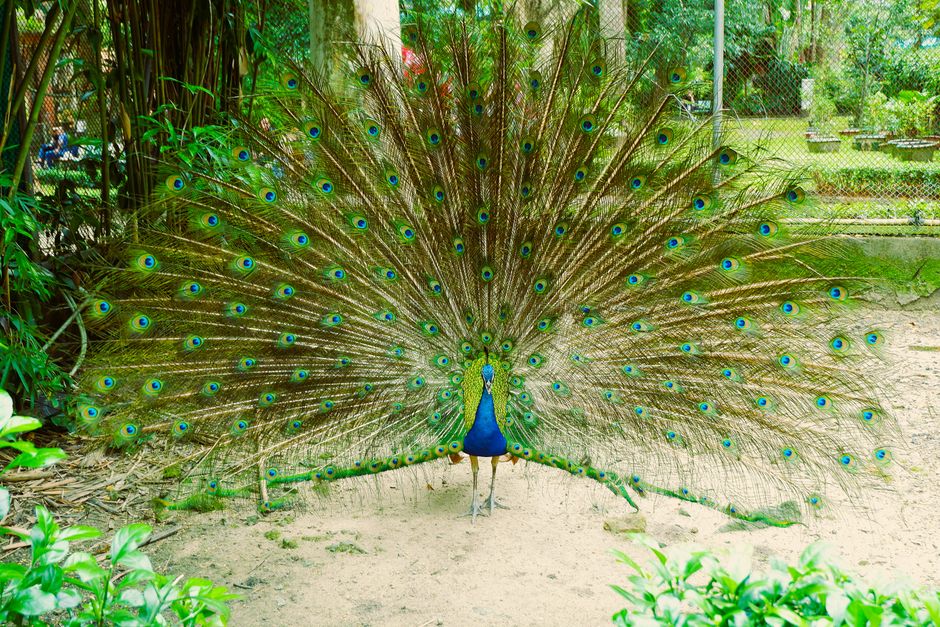
Among the most visually striking behaviors in the animal kingdom are the courtship displays of peacocks. These birds, known for their iridescent train feathers and elaborate movements, engage in complex rituals that scientists have studied for decades. The displays are not merely random performances; they involve coordinated visual and acoustic signals that are observed during specific times of the year when males seek the attention of peahens.
Researchers have documented that male peacocks (peafowl) begin their displays in the early morning or late afternoon, often in open areas where light can highlight the colors of their feathers. The entire performance, from feather fanning to vocalizations, is designed to communicate information to nearby females. By understanding the components of these displays, ornithologists gain insights into how sexual selection shapes the evolution of extravagant traits in birds.
Visual Displays: The Feather Train and Eye Spots
The most prominent feature of a peacock’s display is the large, fanned-out train of feathers that extends behind the bird. This train is not the tail itself but a collection of elongated upper tail coverts. Each feather bears a distinctive eye spot or ocellus, which consists of a blue or green center surrounded by rings of gold, bronze, and black. When the male fans his train, these eye spots become highly visible and create a shimmering effect as he quivers the feathers. Studies have shown that the number of eye spots and their symmetry can influence how much attention a female pays to a particular male. The iridescent colors result from microscopic structures that refract light, producing hues that can shift with angle and lighting conditions.
Beyond static visual cues, the male also uses specific movements to enhance the display. He may turn his body so that the train catches sunlight, or he may shake his feathers rapidly, causing a rustling sound. These actions serve to emphasize the size and condition of the train. A fuller, more vibrant train often indicates that the male is healthy and well-nourished, as feather condition is linked to diet and absence of parasites. Female peahens appear to assess these visual signals before making their choice, though the exact decision-making process continues to be a subject of research.
Acoustic Signals: Calls and Rattle Sounds
While the visual display is the most obvious component, acoustic signals play a crucial role in peacock courtship. Males produce a variety of vocalizations, the most common being a loud, repeated call that sounds like a drawn-out “caw” or “mee-ow.” These calls are used both to attract females from a distance and to announce the male’s presence within a display area. The calls can carry across open ground and serve as an initial point of interest for females who may be foraging nearby.
In addition to vocal calls, peacocks generate a mechanical sound by rapidly shaking their train feathers. This produces a low-frequency rattle that is audible to human observers and likely to peahens as well. The rattle is often produced during the peak of the display, when the male is most active. Researchers have recorded these sounds and analyzed their frequency patterns, noting that the tempo and intensity may correlate with the male’s energy levels or motivation. The combination of visual and acoustic signals creates a multimodal display that provides multiple channels of information to the female.
The Dance Routine: Movements and Orientation
The peacock’s courtship dance is a sequence of stereotypical movements that follow a general pattern. The male typically begins by standing still and fanning his train upward until it forms a semicircle. He then takes small, deliberate steps while keeping the train fanned, sometimes turning his back to the female to show off the full spread. Another common movement is the “shiver,” in which the male shakes the entire train rapidly for a few seconds, causing the feathers to rustle and the eye spots to move in a way that catches the light.
Orientation relative to the sun is another important aspect. Many males position themselves so that the sun shines directly onto the feathers, enhancing the iridescence. In overcast conditions, the display may be less effective, and some males may adjust their angle or even cease displaying. The dance can last from a few minutes to over half an hour, depending on the female’s response. If the female shows interest by lingering or approaching, the male intensifies his movements. If she leaves, he may stop and later resume at another location. This behavioral flexibility suggests that males are monitoring female reactions in real time.
Factors Influencing Display Success
Several factors may influence whether a male’s display successfully attracts a peahen. The condition of his train is one factor: feathers that are damaged, faded, or asymmetrical may reduce his chances. Age also plays a role, as older males often have more fully developed trains and greater experience in performing the display. Environmental conditions, such as the presence of predators or competing males, can alter behavior. For example, a male may shorten his display if he senses a threat, or he may compete with other males by displaying near them, sometimes leading to confrontations.
Female choice is not deterministic; researchers have observed that peahens may reject multiple males before selecting one, and the criteria may vary from one season to another. Some studies suggest that females prefer males with more eye spots, while others emphasize the importance of consistency in the dance rhythm. It is likely that a combination of visual, acoustic, and behavioral cues is assessed, and that individual females have different thresholds of preference. The overall success of a display therefore depends on a dynamic interaction between the male’s performance, the female’s perception, and the surrounding context.
Observational Research Methods
To study peacock displays in the wild, researchers typically employ a combination of field observation and technological tools. Long-term monitoring at display sites allows scientists to record individual male behavior over multiple seasons. Video cameras help capture detailed movements that may be too fast for the human eye, and audio recorders capture vocalizations and mechanical sounds for later spectrographic analysis. Some studies use infrared cameras to observe behavior at low light or during early morning displays.
Experimental approaches have also been used to test specific hypotheses. For instance, researchers have manipulated the number of eye spots on a male’s train by carefully altering feathers, or they have played recorded calls to observe female responses. These methods provide controlled data but must be conducted with care to minimize stress on the birds. By combining naturalistic observations with targeted experiments, ornithologists build a comprehensive picture of the mating displays of peacocks and the evolutionary forces that shape them.